


Three years.
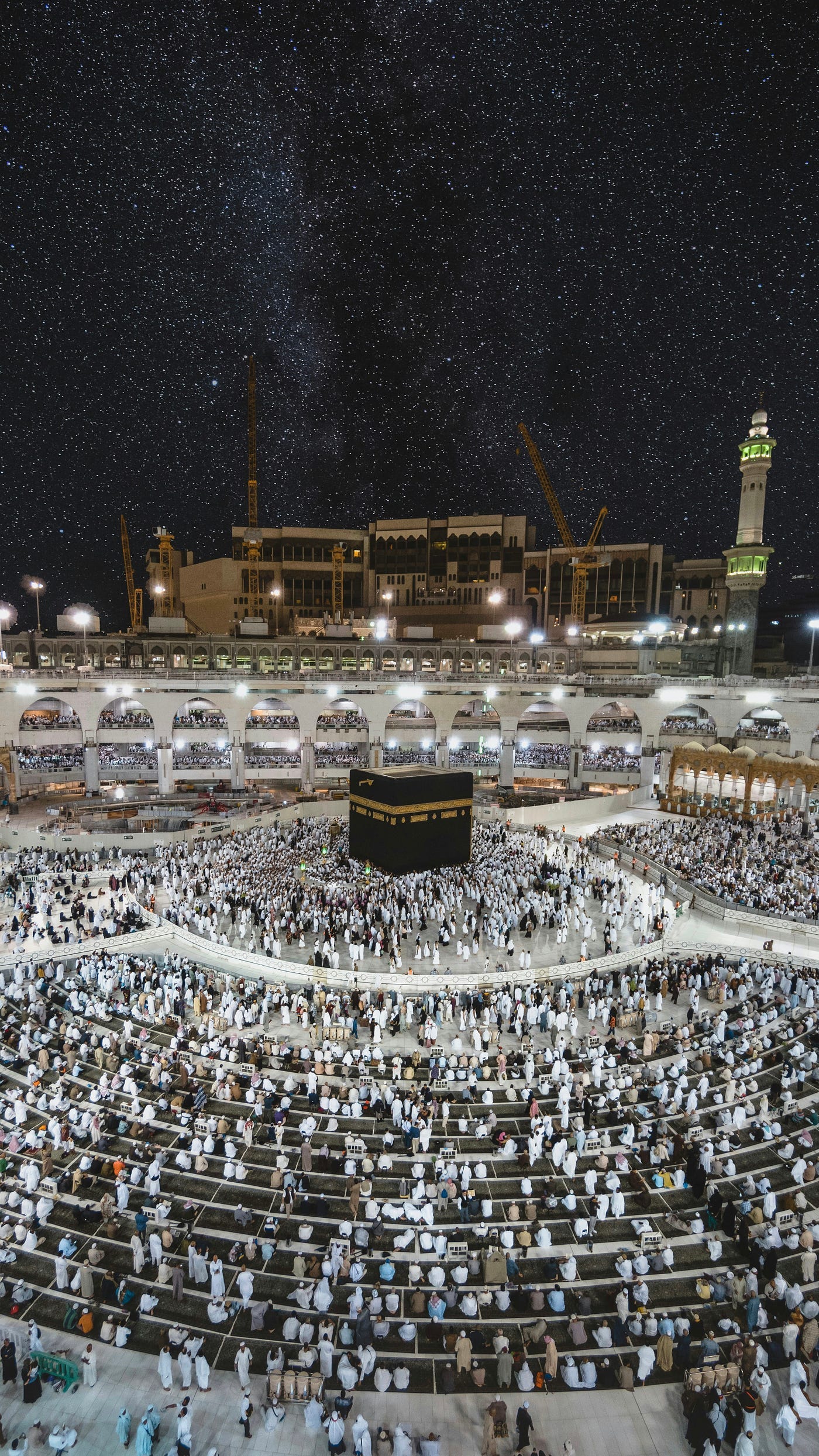
It’s been three years since I became Muslim.
And if you told the old me — the Westside L.A. girl with a bookshelf full of Kabbalah texts and a healthy distrust of organized anything — that this is where I’d end up, I would’ve laughed. Loud.
Not because Islam repulsed me.
Because it never even occurred to me. It wasn’t part of my world.
I grew up in Los Angeles, where everyone’s spiritual but no one’s religious. Where brunch is the new church, and astrology signs matter more than scripture. I was raised in a predominantly Latino and Jewish neighborhood on the Westside — where Catholicism was cultural, and Judaism was familiar, even intimate.
But Islam?
Islam was the desert. It was the news. It was a faraway thing. A misunderstood thing.
Islam was never on the syllabus. Never in the conversation.
We respected it in theory — but only as an abstract.
And I had my own biases. Let’s be real. I had to unlearn them all.
For 20 Years, I Practiced Kabbalah
I left Catholicism when I was young. Not because I hated it — but because it never truly spoke my language.
Kabbalah did.
Jewish mysticism gave me symbolism, structure, hidden meanings. I loved peeling back the layers of the text. I studied it, lived it, wore its teachings like armor during some of the darkest seasons of my life — divorce, depression, grief, single motherhood.
For a long time, it helped me survive.
But eventually, I hit a wall. Not because Kabbalah failed me, but because it pointed to something deeper — a center I hadn’t yet reached. Something was still… missing.
Islam Didn’t Arrive with Fireworks
There was no big conversion moment. No mountaintop. No light from the heavens.
Islam came in whispers. In grief. In long nights alone. In moments of spiritual clarity I couldn’t explain. In questions that cracked me open.
I met Muslims. I listened more. I questioned what I thought I knew.
I studied quietly, prayed cautiously, dipped one toe in at a time.
And then suddenly I realized — I wasn’t trying anymore.
I just was.
I was Muslim.
Not because anyone told me to be.
Not because I was trying to please a man.
Not because I needed a new identity.
But because… this was where the peace was.
Let Me Be Honest About the Baggage
You want to know how steep the hill was?
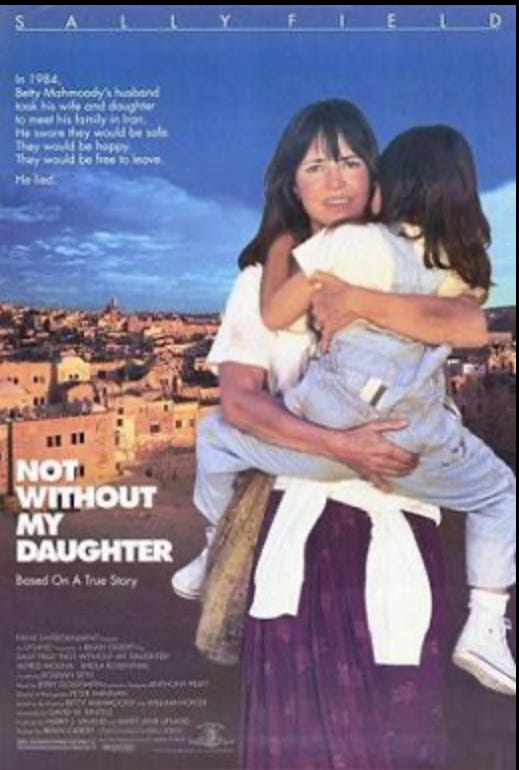
My first reference point for Islam was a film.
It was Sally Field.
That movie Not Without My Daughter — you know, where she’s fleeing Iran with her child. That’s what Hollywood fed us. The Betty Mahmoody story is a wee bit more complicated than what was portrayed.
I actually joked with a friend in Lebanon once, “Well, I’ve seen Not Without My Daughter!”
We both laughed, but deep down, I knew — I had to unlearn and relearn everything.
The media doesn’t get it. The world doesn’t get it.
Islam isn’t something you convert to for popularity — believe me.
Ask Ice Cube, who said Islam is like a well-tailored suit.
Ask Sinead O’Connor, who finally found herself in Islam.
This isn’t a trend. This is truth.
But it’s also the loneliest truth in a culture that’s been taught to fear it.
I Still Don’t Wear Hijab
And that surprises people.
I get the side-eyes. The assumptions.
But I don’t wear a scarf or outward signs of my faith — not yet.
Not because I’m afraid, but because I’m still walking. I’m still growing.
And guess what? I’m still Muslim.
Allah sees my sincerity long before anyone sees my headscarf — or lack thereof.
Some of My “Woke” Friends Ghosted Me
That’s been the hardest part.
People I thought were open-minded — people who marched for every cause, who posted black squares, who knew all the right lingo about inclusion and decolonization — they didn’t get it.
They didn’t ask questions.
They didn’t sit in curiosity.
They just… faded.
And look, I’m not asking for applause. I’m not asking anyone to convert.
I don’t need followers.
I need friends who know how to listen, even when something challenges their assumptions.
The New Insults I Get for Being Muslim
“But you’re so smart — how can you believe in that?”
Translation: Islam is for the uneducated, the brainwashed, the oppressed.
Thanks for the colonial concern, Karen.“You don’t look Muslim.”
As if it’s a costume.
As if I missed the dress rehearsal for “The Oppressed Hijabi Show.”
As if I owe you a visual performance of my private devotion.“You’re too outspoken to be Muslim.”
Oh, sorry — was I supposed to whisper now that I pray?
Newsflash: my voice didn’t convert. It expanded.“So… are you allowed to date now?”
Yes. It’s called having standards, and Islam’s got more of those than your Tinder history.“Don’t they make you cover up?”
Who’s they? You mean… God?
Or are you picturing some imaginary desert uncle who materializes with a measuring stick?“Aren’t you afraid they’ll radicalize you?”
Babe, the only thing radical here is your unchecked Islamophobia.“So you hate gays now?”
No. But I do hate lazy stereotypes, reductionist logic, and this smug little trap you think you set.“You’re American. You can’t really be Muslim.”
Tell that to Muhammad Ali, Congresswoman Omar, and the six masjids down the street.“You’ve changed.”
That’s the point.
Growth isn’t always digestible to the people who preferred your trauma.Radio silence.
The worst insult of all:
The ones who just stop talking to you.
No questions. No effort. Just an unfollow.
Because being Muslim means being inconvenient.
And inconvenient women don’t get invited to brunch.
What I’ve Learned Three Years In
I still struggle.
With prayer times. With community. With wondering if I belong.
But I also know peace now.
Not the spa kind. The soul kind.
I know God in a way that doesn’t need to be marketed or explained.
I raise my son in a home where the name of Allah is spoken gently.
I wake up to a faith that demands honesty, not performance.
And I fall asleep knowing I am not alone.
Islam didn’t make me someone else.
It made me more myself.
And for that, I’m grateful.
This isn’t the end of a journey.
It’s just year three.
And I’m still becoming.
About the Author
Gracie Gato is a Los Angeles-born writer, mother, and unapologetic truth-teller now living in New Hampshire. A former, Catholic, Kabbalist who embraced Islam after a lifetime of spiritual seeking, she writes from the intersections of faith, feminism, and fury — where motherhood meets mysticism and survival becomes its own kind of scripture. She is the creator of Adam’s World, a children’s series inspired by her autistic son, and a fierce advocate for caregiver rights, Palestinian justice, and centering the voices too often erased.
If her story moved you and you’d like to support her and her son during this pivotal time, you can contribute to her GoFundMe here:
Help Gracie Save Her Home